
Is the Soil Barren? Reflecting on the Source of Your Urban Discontent
Hate is such a volatile word—arguably the most powerful in the English language. To hate is to feel a deep disgust or a complete loathing for a place, a person, or an ideology. It’s a word born from anger, fear, and a sense of personal threat. Unfortunately, it often drives people to perform regrettable acts or say things that spark negative and sometimes violent responses.
Yet many of us use the word casually to emphatically express our extreme dislike for traffic jams, a certain food, the weather, or our jobs. The list is endless. I have heard people say countless times that they hate the city—or even the entire state—where they live, claiming they can’t wait to leave.
But if you take the time to reflect on the true source of your "hate," you may find it isn’t the place at all. It might be your circumstances that have you looking to abandon your "soil."

The Audit Challenge: Before you read further, take the WDIB BQ Speed-Sense Test.
Are you moving through your life at a velocity that makes it impossible to sense your surroundings?
The Speed-Sense Test: A Diagnostic for Discontent
If you find yourself using the word "hate" to describe your city, I want you to run a diagnostic before you pack your bags. I call it the Speed-Sense Test. This test measures the relationship between how fast we move through our environment and how much "identity" we actually perceive.
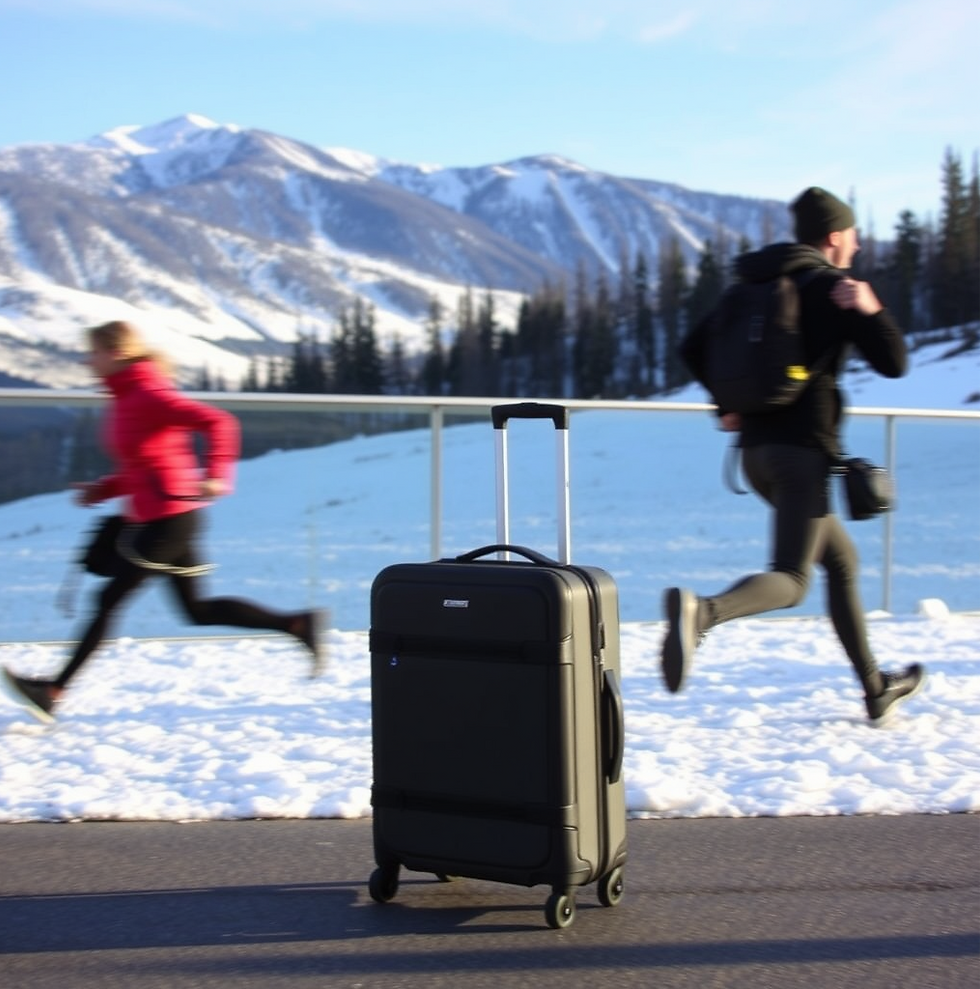
High-Velocity Living (The Corridor Phase): When we are stuck in a cycle of commuting from home to work and back again, we are moving through the city at a velocity that blurs the "strata." At this speed, the city is just a series of obstacles—traffic, red lights, and noise. You aren't sensing the city; you are just surviving it.
The Auditor’s Pace (The Sanctuary Phase): When we slow down—walking a neighborhood or sitting in a local park for 30 minutes—our "sense" increases. This is the only speed at which you can identify a Social Anchor.
The Result: Often, what we "hate" isn't the soil; it’s the fact that we are flying over it so fast that we’ve never actually touched it. If your velocity is high and your sense is low, any zip code will eventually feel like a desert
Our circumstances can be overwhelming and a new location to “start” over can be alluring. Financial and personal obstacles can make your environment the catalyst behind your impossible situation. For example, if you are experiencing financial difficulties, has the cost of living increased exponentially or are you living above your means? Are you bored because there are no social outlets, or have you not visited social anchors in your community?
Tilling Your Own Soil
If you find yourself blaming your geography for your unhappiness, it’s worth asking: Are you a victim of your location, or have you just stopped tending to your roots? When we talk about "social anchors," we are talking
about the people, places, and activities that keep us grounded and connected to a community. These are the libraries, the local coffee shops where the barista knows your name, the volunteer groups, or even the neighborhood park. Without these anchors, any city can feel like a desert. Instead of looking for the exit sign, try tilling your own soil by following these steps:
Identify Your Anchors: List three places in your current town where you feel a sense of belonging. If you can’t name any, your "hate" might actually be a lack of connection.
Audit Your Routine: Are you staying inside, fueled by a screen, and wondering why the city feels "dead"? Movement creates momentum. Visit a "social anchor" once a week for a month before you decide the city has nothing to offer.
Challenge the Financial Narrative: If the cost of living feels like a weight, look at the "soil" of your budget. Is the city expensive, or is the lifestyle you are trying to maintain in that city unsustainable?

Reflective Thought: A change of scenery is a temporary fix for a permanent internal state. If you don't change how you interact with your environment, you will likely find the same "hate" waiting for you in the next zip code. Conclusion: Before You Pack Your Bags
Ultimately, if we aren't careful, the word "hate" becomes a mask. We use its intensity to cover up the much quieter, more uncomfortable feelings of stagnation, loneliness, or financial strain. It is far easier to say, "I hate this city," than it is to admit, "I am struggling to find my place within it." Before you decide that a new zip code is the only cure for your discontent, take a hard look at the ground beneath your feet. Is the soil truly barren, or have you simply stopped watering it? Moving might change your view, but it won’t change your habits. If you don't address the circumstances that fueled your frustration, you might find that the "hate" you tried to leave behind has simply followed you to your next destination.
Before you abandon your soil, try tilling it. You might be surprised by what can still grow when you choose to stay and dig deep.
Final Sign-Off
"You can't judge the quality of the soil from the window of a plane. You have to get your hands in the dirt."


Comments