
From Waterfronts to Concrete Beats: How a Phone-Free Market Crawl Rewrote My City Rhythm
- May 18
- 8 min read
Updated: May 18
May 16, 2026
I woke up with the intent to analyze history and compare local markets, to observe the city vibes and provide a history of how they have become a major social anchor that has connected communities together. But as the day unfolded, it evolved into something much larger: an epiphany of how much we lose by staring into phones and laptops instead of observing and appreciating the people right in front of us.
Each market possessed its own unique personality and character, shaped completely by its location, its vendors, and its people. Yet, from the bustling square of Silver Spring to the overwhelming sprawl of Eastern Market, I realized the true value was never found merely in the goods sold. It was hiding entirely in the live interactions between the sellers and the people browsing for hidden gems.
Despite the traffic, the crowds, and the familiar background chorus of city horns and sirens, I felt a great sense of inner peace walking the city with just my camera and nothing else. Here is the unfiltered next draft of that journey.
🧺 FreshFarms (Silver Spring)
Act I: The Starting Line and the Community Powerhouse

My exploration began at FreshFarms, located right in the center of Veterans Plaza in Silver Spring. Surrounded by bustling retail spaces, restaurants, and the nearby Metro station, it serves as an ideal socioeconomic crossroads for a Saturday morning crawl. Open nearly year-round every single Saturday from January 3 to December 26, this community powerhouse operates from 9:00am to 1:00pm, shifting back to a 10:00am start during the colder winter months.

The market hosts approximately 45 long-term vendors. Stepping onto the plaza with nothing but my camera, I quickly realized that the true value of this space wasn’t tied to consumerism, but to offline human interactions. It was fascinating to see multiple generations of farming families working side-by-side, selling tomatoes, greens, and carrots. The city vibe here was alive with crowds, fluid conversation, and the rhythmic swiping of cards in exchange for artisan soaps, perfumes, and fresh produce.
Because I wasn't looking down at a screen, I unlocked conversations over digital connectivity. The buzz came entirely from live interactions instead of broadband connections built from 0s and 1s. At the Quaker Valley and Pecan Fresh Farms stands, I discovered that the world contains far more than the two or three tomato colors you see in a grocery store. A passerby overheard me mentioning that I had never seen a black tomato; instead of ignoring me, he smiled, admitted he hadn't either, and ushered me over to look at an array of uniquely shaped heirloom varieties.


Moments later at the Pecan Fresh Farms stand, I discovered a goose egg—an item nearly three times the size of the conventional chicken eggs I am accustomed to buying. Beyond the massive eggs and an assortment of quality meats, you can find teas, cheeses, local wines, and hot prepared food if you get hungry while shopping. It was a masterclass in community anchoring, driven entirely by human voices rather than algorithms.

⛵ The Wharf's Farmer's Market
Act II: Sifting Through the City Noise
From Silver Spring, I moved down to the water. Though it was the smallest of the three markets on my itinerary, Farmers Market SW instantly became my favorite! Operating Saturdays from April 4 through November 21 at M Street Landing, this location managed a rare urban feat: it was simultaneously busy yet entirely serene.


I arrived with less than an hour left before closing time, but a sizeable crowd was still lingering happily along the waterfront. The shift in city rhythm was palpable, and the vendors here were incredibly personable. The first maker I stopped and chatted with was Jordan, who crafts customized small-batch spice blends under the brand Itsumono. He walked me through his unique flavor profiles, all boasting unforgettable, catchy names like "Lucky BBQ" and "OK Kristen". I bought a few blends and can't wait to spice up some fresh salmon with them!

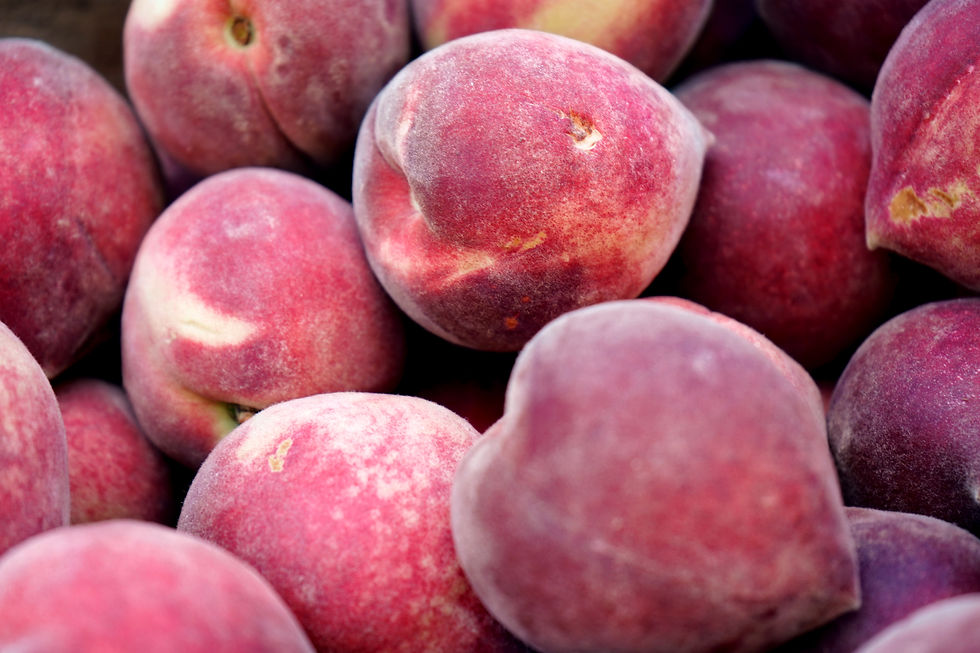
Next, I paused at the Ashton Farms stand, where the fruit samples were exceptionally sweet and delicious. I had the absolute pleasure of learning a little bit of local history about Ashton Farms from the working crew. My only regret was a logistical one: because I was traveling via WMATA public transportation, I couldn't carry one of their massive, sweet watermelons home with me. I made a mental note to return next time with my car keys instead of a Metro card.

The gorgeous weather and sparkling water offered a perfect excuse to slow down. If you want to break for lunch before leaving, The Wharf has several excellent restaurants offering various cuisines. But if you just want to rest your feet, there is plenty of dedicated seating designed for reading, relaxing, or meditating. I sat down, took a deep breath, and enjoyed a total reprieve from the bustling city before transitioning into the historical heart of the district.
🏛️ Eastern Market
Act III: The Historic Legacy Anchor
 |     |    |
If Silver Spring is the community powerhouse and The Wharf is the serene escape, Eastern Market is the absolute flagship of local markets in the area. Completed on Capitol Hill in Southeast in 1873, this landmark represents the literal execution of Pierre L’Enfant’s original vision for an open local market. Celebrating 150 years of continuous operation, it is the original Washington, D.C. farmers market. While it might not be the physically largest market in the area (Dupont FreshFarm holds that title), it is by far the longest running and serves as a prime social anchor for friends, families, and D.C. visitors alike.

Stepping into the massive outdoor rows and the indoor Event Hall, the sheer scale of clothing, jewelry, home goods, and produce was incredibly overwhelming. Admittedly, the experience for me was a bit much at first; it will take several targeted visits to fully appreciate everything these vendors offer. It is a dense, bustling space where you will find yourself saying “excuse me” dozens of times as you navigate the packed pathways. Yet, beneath the chaotic crowds, it remains the literal heart of the Capitol Hill community.


Slowing my pace down to match my phone-free mindset allowed me to truly connect with the people behind the tables. I struck up a conversation with Habeebah of Habeebah’s Herbals, who provided me with a brief history of the market. She has been a vendor here for over 20 years. With over 30 years of experience as a certified aromatherapist, she has an amazing line of handmade body butters that I highly recommend.
The indoor market also features several places to grab a bite and relax should your feet start to hurt. While the indoor and outdoor markets are open both Saturday and Sunday, keep in mind that the hours vary. It was a stark reminder that Eastern Market's real legacy isn't preserved in historic brick walls, but in the lifelines of the people who return to its stalls weekend after weekend.
🧱 Cordelia (Union Market District)
Act IV: Documenting the Structural Friction
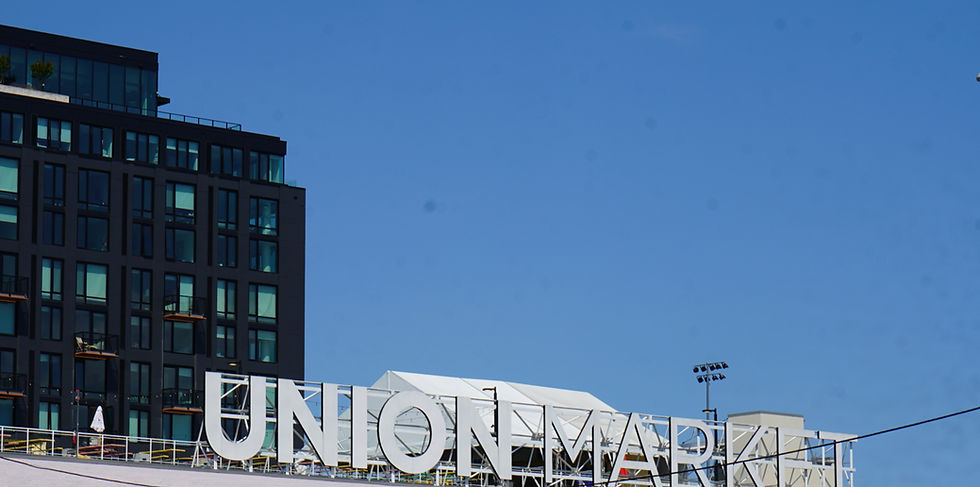
Leaving Capitol Hill, I drifted into the Union Market District, where I encountered a completely different, almost strange vibe. Stepping out of the NoMa-Gallaudet U Metro Station, you are immediately greeted by the sleek steel and glass artistry of modern office buildings and upscale living spaces. Walking further toward the heart of the Union District, I hit an internal wall of hesitation—I wasn't entirely sure if this was a place I truly wanted to visit.
The architecture tells the story of a neighborhood caught in an identity crisis. The modern steel and glass walls are forced to mix right alongside heavy graffiti, weathered legacy businesses that have withstood waves of gentrification, and a diverse community footprint not found anywhere else in the city. The Union District lives as a unique but distinct disconnect from the rest of D.C. On one side of the street, you see the raw, gritty 1930s industrial bones, concrete loading docks, and brick facades of the city's historic wholesale food terminal. On the immediately opposing side, a massive wave of modernization has taken over—glossy luxury apartment complexes, high-end boutique retail, and upscale hotels are closing in around the original market pavilion.


As I traveled just away from the main area of the market, I even caught a brilliant glimpse of raw city civic life: mayoral hopeful Kenyan McDuffie was out on the street, actively urging a gathered crowd to vote for him in the June primaries.

I had the option of dining directly inside the main Union Market building, but after spending the day navigating massive crowds and the mid-day heat, I desperately wanted a hideaway from the city noise. I chose to dine at Cordelia Fishbar. Sitting inside this stunning, upscale, and entirely coastal-focused restaurant right in the center of a landlocked, industrial warehouse grid perfectly crystallized the paradox of the neighborhood.


The experience was made even more pleasurable by my incredible waiter, Ebon (spelled like Ebony, but without the "y"). His greeting to me began with a warm, genuine: “You have a great smile. Thank you for the compliment.” When I inquired about the history of the restaurant's name, he explained that Cordelia translates to "daughter of the sea" and noted that it is the newest addition—and notably the only dedicated seafood restaurant—in the Clyde's Restaurant Group portfolio. The food was deeply flavorful, and the cozy ambiance and warm lighting provided a flawless, quiet sanctuary to reflect on the city's rapid evolution. Cordelia proves that while modernization can feel jarring, it is undeniably bringing world-class execution and beautiful culinary design to the urban table.


🎵 Veteran's Plaza
Act V: The Return and the Concrete Beats
 |  |  |
To close out the day, my itinerary brought me back full circle to Veterans Plaza in Silver Spring for a much-needed rest stop. It was here, sitting quietly without a digital device buzzing in my lap, that the entire day's thesis finally crystallized into a profound epiphany.
Across the wide concrete plaza, an unexpected scene unfolded right in front of me: a couple had completely let go of the world around them, moving together in an impromptu, rhythmic street dance right on the pavement. By looking through a camera viewfinder instead of staring downward into a smartphone or a laptop screen, I was granted full admission to the unfiltered, soulful pulse of the community. The traffic hummed, the sirens echoed in the distance, but the dancers kept their rhythm perfectly.
I realized that I had set out that morning with a highly clinical, analytical goal to compare physical market layouts and historical social structures. Instead, the city showed me that the ultimate social anchor isn't a historic landmark or a trendy waterfront development—it is the unscripted, shared humanity that we only experience when we choose to actively look up and truly observe the living world around us.
As I walked back to the parking garage to my car, I had a few more minutes to reflect on the day as I observed the city through my camera lens. I had traded isolated technology for a landscape of rich human interactions—catching fragments of conversations about upcoming wedding plans, witnessing the heavy, familiar burden of someone staring disappointedly at a phone screen, and listening to the collective sounds of community unity.
📝 Epilogue: A Manifesto for the Living
"Despite the convenience of modern technology and our ability to network with individuals thousands of miles away, a screen will never be able to manufacture the true satisfaction, nor fulfill the natural, human longing, to deeply connect with the living around us." |



Comments