
Holding On While They’re Letting Go
The Unspoken Emotions, Sacrifices, and Importance of Connection in Caregiving
If you've been following along with me on this journey, you know that the inspiration behind Where Do I Belong? (WDIB) was born from my experience as my mother's caregiver and primary support.
National Family Caregivers Month is observed in November, and this year's theme, selected by the Caregiver Action Network, is "Care Connects Us."
One of my first Caregiver's Corner blogs, The Burden of Guilt, explored the emotional hurdles and challenges I faced while caring for my mother. Since writing that piece, I have watched several of my friends step into this very same space—either mourning the loss of loved ones or becoming caregivers themselves for their parents, spouses, and other family members.

The Weight of Letting Go
Dealing with lingering feelings of guilt, witnessing the slow decline and increasing fragility of someone you love, and struggling with the realization that your loss may be approaching sooner than you are prepared to accept is an overwhelming reality.
Holding on while someone you love is letting go is something no one wants to face.
Through my own experiences, I have been able to offer a listening ear and support to friends who are now embarking on this journey—a journey that, for many of us, means an unavoidable separation from the life and relationship we once knew.
Care Connects Us
"Care Connects Us" is such a powerful theme because caregivers truly need connection to help them navigate the weight of their responsibilities.
That support must come from many places: doctors, health insurance providers, nursing facilities, and other professionals involved in a loved one's care. But perhaps most importantly, it must come from the presence of family and friends.
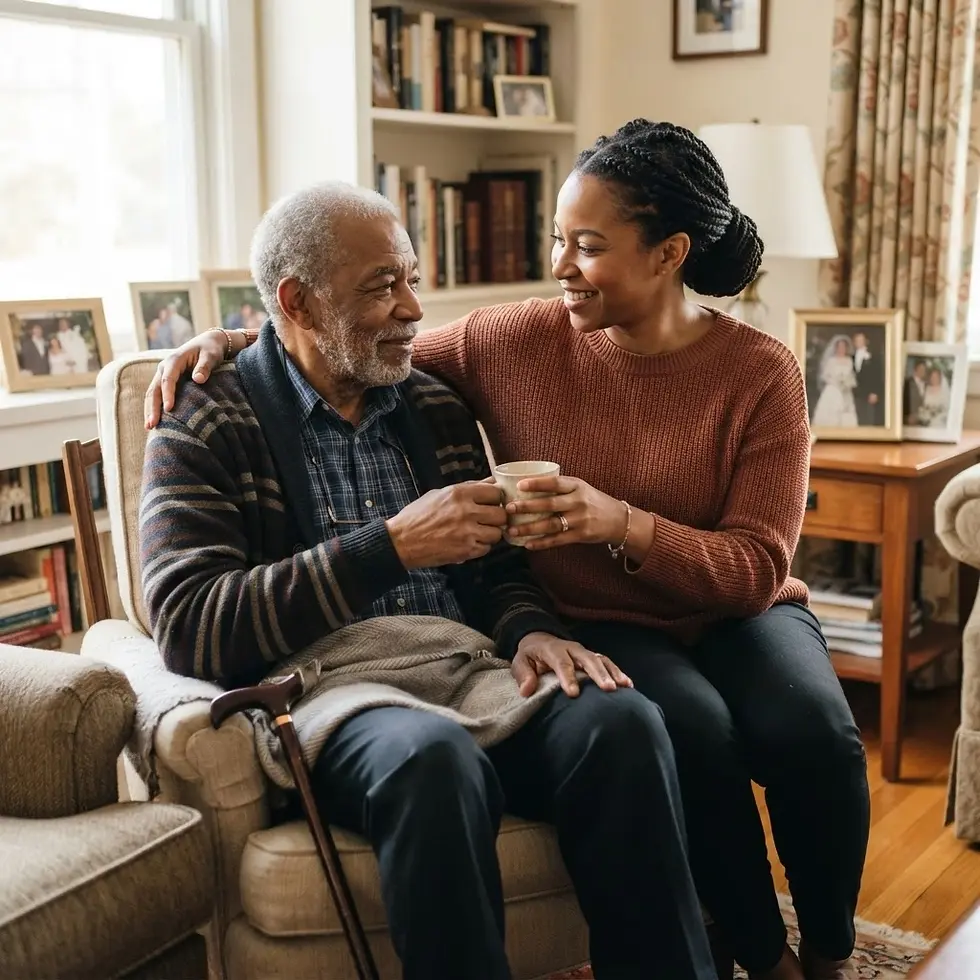
Regardless of how prepared we think we are, the emotional demands of caregiving are not something we should have to navigate alone. Community support is essential—not only to help us provide dignity and care for those we love, but also to help us maintain the delicate balance between being a caregiver and finding the time to care for ourselves.
Tug of War: Letting Go of Their Former Version
In the beginning of my mother's health transition, I struggled with allowing her to peacefully settle into her new reality. I wanted her to push herself back to health because I wanted her to maintain her independence. I wanted her to continue living the life she enjoyed.
Looking back, my own inability to accept what was happening sometimes prevented me from recognizing that she wasn't choosing to give up. She simply couldn't do anymore.
But there was another part of my resistance that I had to confront. I was seeing a glimpse of what my own future might hold, and I wanted reassurance that there was a way to escape the cruelties of aging.

It took me a while to reach that realization. But once I did, I finally found a place of acceptance. It made navigating our changing relationship and our increasingly reversed roles much easier.
Over time, I found myself sharing this realization with friends who were beginning their own caregiving journeys. No one chooses to become a more physically dependent version of themselves. No one voluntarily gives up their independence or chooses to surrender their dignity.
And perhaps this is where we, as caregivers, need to shift our perspective.

As important as it is to ensure medications are taken and transportation to medical appointments is arranged, we must not lose sight of something equally important: reassuring our loved ones that despite the physical changes, despite their growing dependence on others, they still matter. They are still valued. And they are still deserving of the same dignity and respect they have always known.
Letting go of who someone used to be doesn't mean letting go of who they are now.
The Guilt That Comes With Letting Go
Caregivers are faced with guilt about a lot of things:
Guilt for not being able to do more.
Guilt for not being able to make their loved ones better.
Guilt for not wanting to be a caregiver.
Guilt for being frustrated with the people they care for.
Guilt for wanting the caregiving journey and its emotional demands to be over.
This is where support is especially important. Caregivers often remain silent about these feelings because of the shame associated with having such thoughts and the mistaken assumption that they are the only ones experiencing them.
If you are a caregiver, you are not alone.
I think it is normal to experience some of these thoughts and emotions. Having them doesn't make you a bad person, nor does it mean you love the person you're caring for any less.
However, when these feelings go unacknowledged and unmanaged, guilt can easily turn into resentment. Resentment toward the circumstances that have disrupted your life. Resentment that caregiving has negatively impacted your finances. Resentment that your own happiness and personal aspirations have been put on hold. And perhaps the most difficult part is feeling resentment toward someone you love, knowing that they never asked for this either.

These are difficult emotions to acknowledge, but pretending they don't exist doesn't make them disappear. Sometimes, simply having a safe place to express them without judgment can make an enormous difference.
The People Who Help Us Carry the Weight
It is just as important to plan and create a network of support for yourself as it is to develop your loved one's care plan.
Caregivers need people who will:
Listen without judging.
Offer practical assistance instead of simply saying, "Let me know if you need anything."
Recognize that the caregiver is also experiencing loss.
Understand that sometimes the caregiver needs to talk about something other than caregiving.
It may seem cruel to say, but the reality is that many of the people in our lives are fair-weather friends and family members. This doesn't necessarily make them bad people. It does, however, reveal an uncomfortable reality: when friends and family face challenges we aren't equipped to solve, we may struggle to know how to respond or how to help.

Manage your expectations. Not everyone will be able to show up in the ways you need, and some may not show up at all.
That doesn't mean you should navigate this journey alone. Seek out support groups, caregiver organizations, and other resources where you feel safe sharing your experiences and expressing the emotions that come with caregiving. Sometimes, the most valuable support comes from people who don't need you to explain why this journey is difficult because they are walking a similar path.
Finding Yourself Again
Caregiving can consume so much of your identity, time, and emotional energy that you can lose sight of the person you were before it began.
Journal your experiences, challenges, and what it took to overcome them. As you work to rebalance your life and reclaim your identity, you may find that you like the "new version" of you better.
Caregiving requires sacrifices, particularly of your time. We often find ourselves doing things we never imagined we would have to do, taking on responsibilities we never anticipated, and putting aside activities and interests that once brought us joy. But the experience can also introduce you to social anchors, perspectives, and activities you might never have discovered otherwise.
I became more patient. I stopped attending events and participating in activities, not because I no longer enjoyed them, but because I simply didn't have the time. I discovered the true meaning of humility. I became a stronger, more confident person and learned that my life, my inner peace, and my sovereignty are not dependent on other people's expectations or relationships that require too much of my energy to maintain.
I found, and am still discovering, the joy of living my life unbothered by people, places, and things that once made me feel like a ghost of myself.
The experience of becoming a caregiver can change you in ways you never anticipated. It can strengthen your bond with the person you support and bring a deeper appreciation for the time you have together.
I don't want to romanticize the sacrifices or suggest that the difficult parts somehow become less difficult in retrospect. They don't always. But I do believe there can be something meaningful in what we discover about ourselves along the way. So many times, people would say to me that although things seemed frustrating at the time, I would be glad I cared for my mom. At the time, I couldn't possibly conceive of that.
At the end of the journey, the people you care for may not be able to tell you thank you or acknowledge a job well done. But my mother was able to do that. And it was worth every sacrifice I made for her care.
A Final Thought
But in the process of caring for someone else, don't forget that you are still a person with your own needs, aspirations, relationships, and life to live.
You can love someone deeply and still need a break. You can be grateful for the time you have together and still grieve what is changing. You can be a devoted caregiver without allowing caregiving to become your entire identity.
Care connects us. But that connection must include the caregiver, too.
Caregiver Resources
Finding the right support can make a significant difference in your caregiving journey. The following organizations offer information, guidance, services, and resources for caregivers and their families.
National Resources
A Place for Mom – Provides personalized guidance to help families explore senior living and home care options. Its advisory services are free to families.
Caregiver Action Network (CAN) – A national nonprofit dedicated to improving the quality of life for family caregivers through education, peer support, and resources.
Family Caregiver Alliance (FCA) – Provides education, information, and support for caregivers of adults with physical and cognitive impairments, including dementia, Alzheimer's disease, Parkinson's, and stroke.
Regional Resources
Department of Aging and Community Living (DACL) – A District of Columbia agency offering programs and services for unpaid caregivers, including respite programs, support groups, educational opportunities, and case management.
Maryland Office of Health Care Quality (OHCQ) – Monitors the quality of care and services provided by Maryland healthcare facilities and community-based programs. Provides information for consumers who have concerns about the quality of care.
Note: Some resources are location-specific. Check eligibility and service availability directly with each organization.
Have you experienced the challenges of caregiving? What helped you navigate the journey? Share your thoughts. Sometimes, our stories are the connections someone else needs.

Comments